n8n review

n8n
The pragmatic choice for engineering-led teams: full automation power, LLM agent nodes, and the freedom of self-hosting — at the cost of a steeper on-ramp.
OVERALL SCORE
8.4
out of 10
External link · opens in new tab
TL;DR
n8n is the open-source automation platform that has quietly become a serious AI agent platform thanks to its LangChain-powered agent node. For engineering-led B2B teams that want full control of their automation stack — including the ability to self-host and avoid per-execution lock-in — n8n is the strongest value play in 2026.
Who it’s for
n8n suits technical teams: a developer or DevOps person owns the deployment and writes the occasional code node. Marketing and ops users can extend pre-built workflows but can’t realistically build from scratch in n8n without help. If everyone in your org expects a Notion-level UX, look elsewhere.
The two killer use cases: (1) shops that already self-host infrastructure and refuse to send data to third-party automation services; (2) high-volume operators where per-task pricing models become prohibitive — n8n’s flat infrastructure cost scales linearly with capacity, not usage.
At a glance
- Pricing: Self-host free; n8n Cloud from $20/month (Starter) to enterprise contracts
- Billing: Monthly or annual; self-hosted uses Sustainable Use License (free for internal use, no resale-as-a-service)
- Free trial: 14 days on Cloud Pro
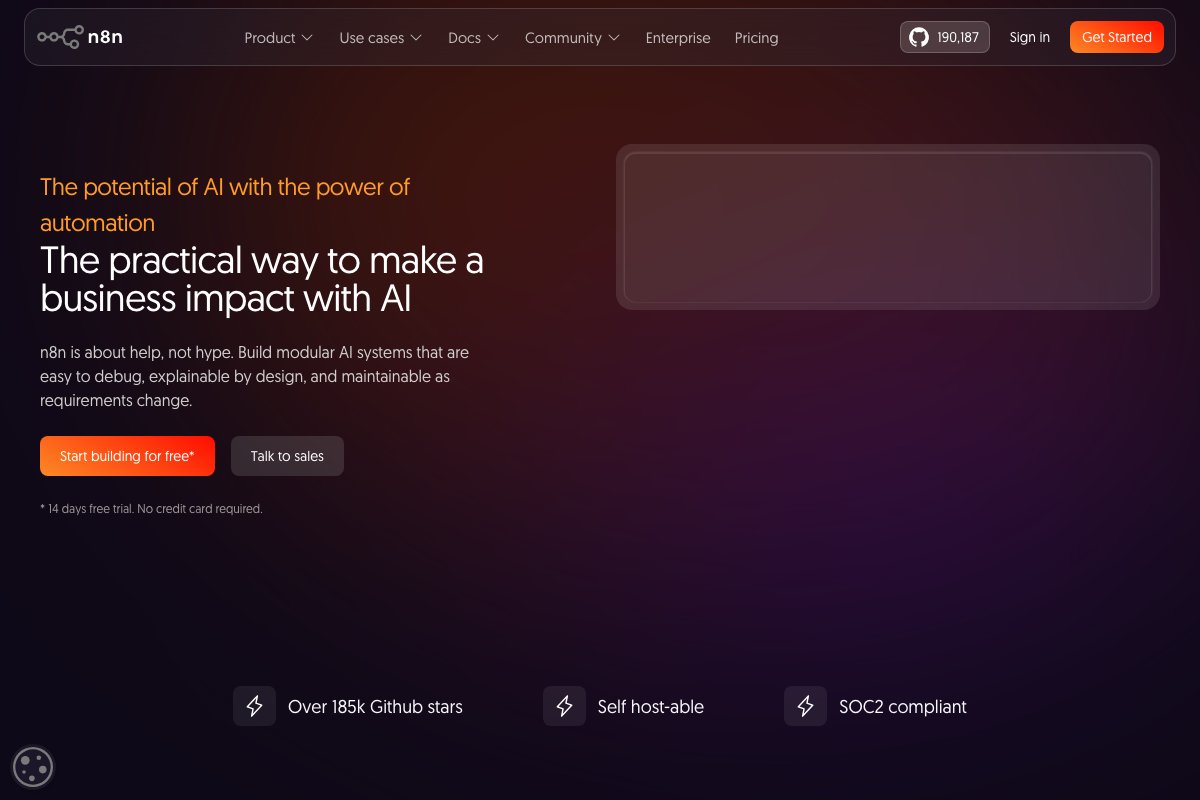
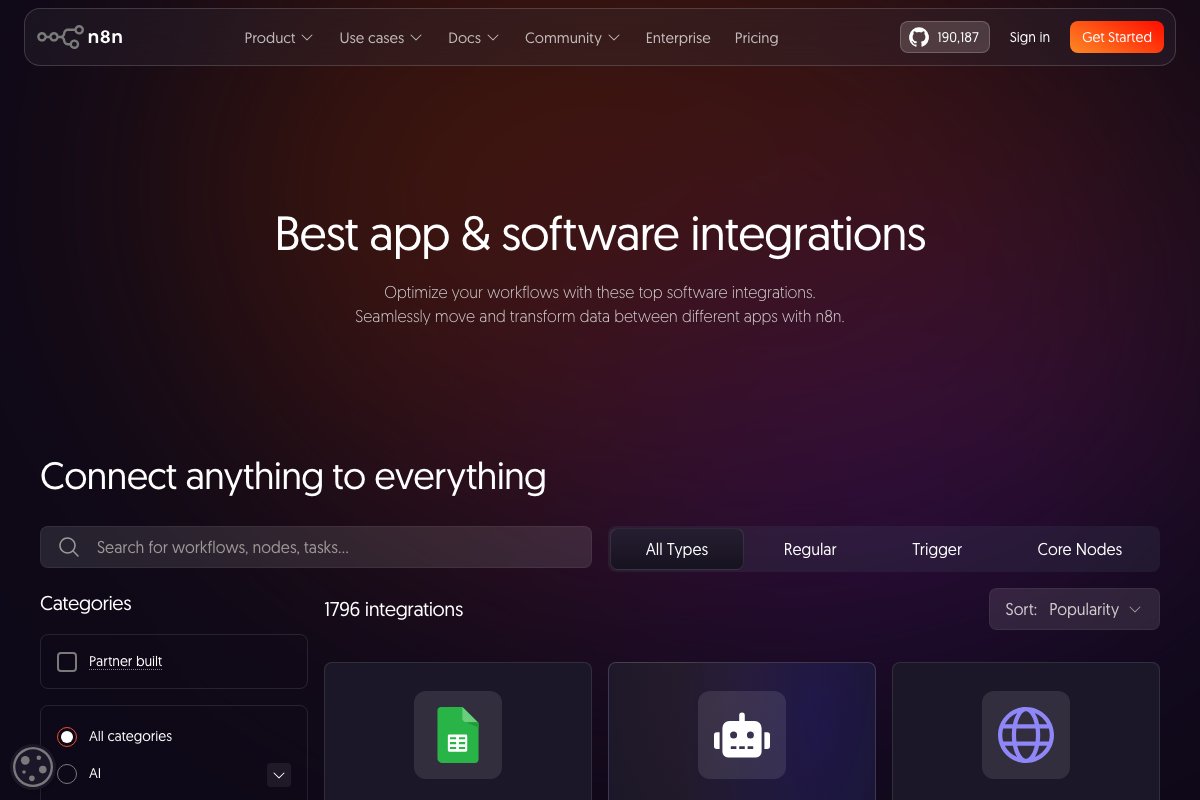
- Integrations: 400+ official, plus community nodes
- Models: Any LLM with an HTTP API — agent node natively supports OpenAI, Anthropic, Google, local models via Ollama
Features deep-dive
Workflow engine. n8n’s core is a robust node-graph executor with first-class support for loops, branches, error handling, sub-workflows, and webhooks. Compared to Lindy or Make, the execution model is more sophisticated — closer to a real workflow engine than a pretty automation builder.
Agent node. The AI Agent node implements the standard ReAct pattern: the LLM reasons, picks a tool, executes, and observes. Tools are other n8n nodes wrapped as agent-callable functions. This means the agent can use any of the 400+ integrations as a tool, which is a unique strength — most agent frameworks make you wrap third-party APIs by hand.
Code nodes. When the visual nodes don’t fit, drop a JavaScript or Python code node into the workflow. This escape valve is what makes n8n production-viable for complex use cases. Lindy and similar visual-first platforms either force a custom integration build (slow) or simply can’t handle the edge case.
Self-hosting. Docker-compose deploy with Postgres for state. The community Docker image is well-maintained. For SOC2 / data residency constraints, this is a major differentiator.
Pricing analysis
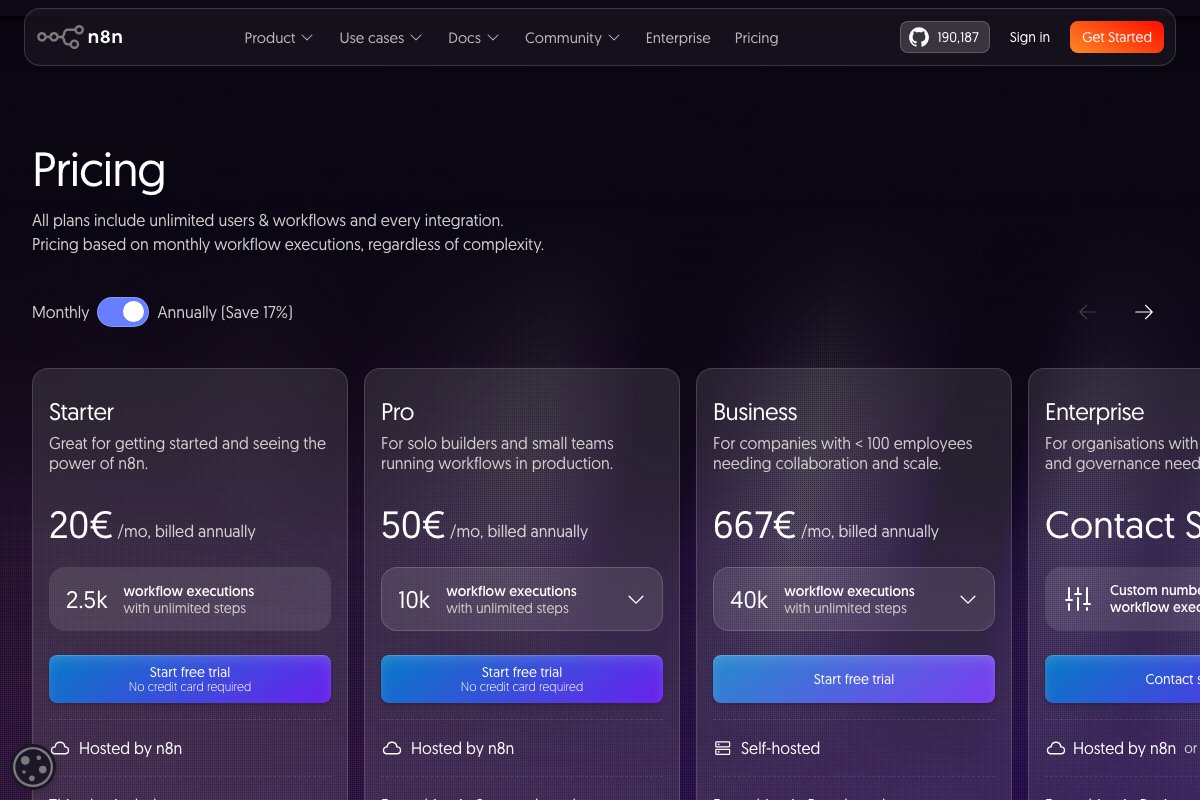
Self-hosting is the cheat code. A €20/month server (Hetzner or similar) runs n8n at thousands of workflow executions per day. Compare to Lindy at $499/month for 50,000 tasks or Make at $29/month for 10,000 operations: n8n’s TCO is roughly 5-20x lower at scale, with the cost being engineering time to maintain the infra.
n8n Cloud at $20/month makes sense for low-volume teams who don’t want to run infra. At higher volumes, Cloud’s pricing becomes less compelling than self-hosting.
Strengths
The execution observability is outstanding. Every workflow execution is logged with full payloads at each step; you can re-run from any point with edited inputs. For debugging agent decisions, this is what you want: replay the exact sequence that led to a bad outcome and inspect the LLM call directly.
The agent node integration with the 400+ native connectors is genuinely powerful — no other platform makes it as easy to give an agent access to Slack, HubSpot, GitHub, and a SQL database simultaneously, all with proper auth handling.
Weaknesses
The UX is the price of the power. The node-graph builder is dense, the configuration panels are deep, and the documentation assumes engineering competence. For non-technical operators, n8n is a wall. Onboarding a marketing ops person takes a full week of pairing, versus an afternoon for Lindy.
Agent observability inside the workflow is good, but cross-execution analytics (success rates over time, cost trends, common failure modes) require either external tooling or self-built dashboards. The product doesn’t ship this layer.
Verdict
For engineering-led teams, n8n is the highest-value agent platform on the market in 2026 — full stop. The combination of self-hosting, agent node maturity, and 400+ integrations is unmatched. If your team profile fits, this is the right default. If your team doesn’t have at least one engineer-shaped person who owns the deployment, choose Lindy or Make and accept the higher cost ceiling. See FAQ below.
FAQ
-
Should I self-host or use n8n Cloud? +
Self-host if you have DevOps capacity (Docker, Postgres backup, TLS). Choose Cloud if you want to skip ops or need SOC2 compliance you don't want to build yourself.
-
How does the AI agent node compare to dedicated agent frameworks? +
n8n's agent node wraps LangChain under the hood and gives you the standard ReAct loop with tool calling. It's solid for workflows with up to ~5 tools per agent; beyond that, a code-first framework like CrewAI offers cleaner orchestration.
-
Is n8n really free? +
Self-hosted n8n is fully free under the Sustainable Use License (no resale-as-a-service). LLM API costs (OpenAI, Anthropic) are separate. Cloud plans start at $20/month for low volume.
-
Can n8n replace Zapier and Make? +
Yes for technical teams. The integration count is comparable, the execution model is more powerful (loops, branching, conditionals), and the cost structure favors n8n at any meaningful volume.
- Lindy vs n8n: Which automation platform for AI agents?Lindy if ops teams need to ship agents this quarter without engineering; n8n if engineers want a self-hosted workflow engine with AI as one node among many.
- n8n vs Relevance AI: Open-source workflow engine or revenue-focused agent workforce?n8n if you have engineering capacity and want full control over a self-hosted automation stack; Relevance if you're a sales or growth team that wants AI employees out of the box.

Stéphane Viaud-Murat
CEO, mi4.fr