Agent.ai review

Agent.ai
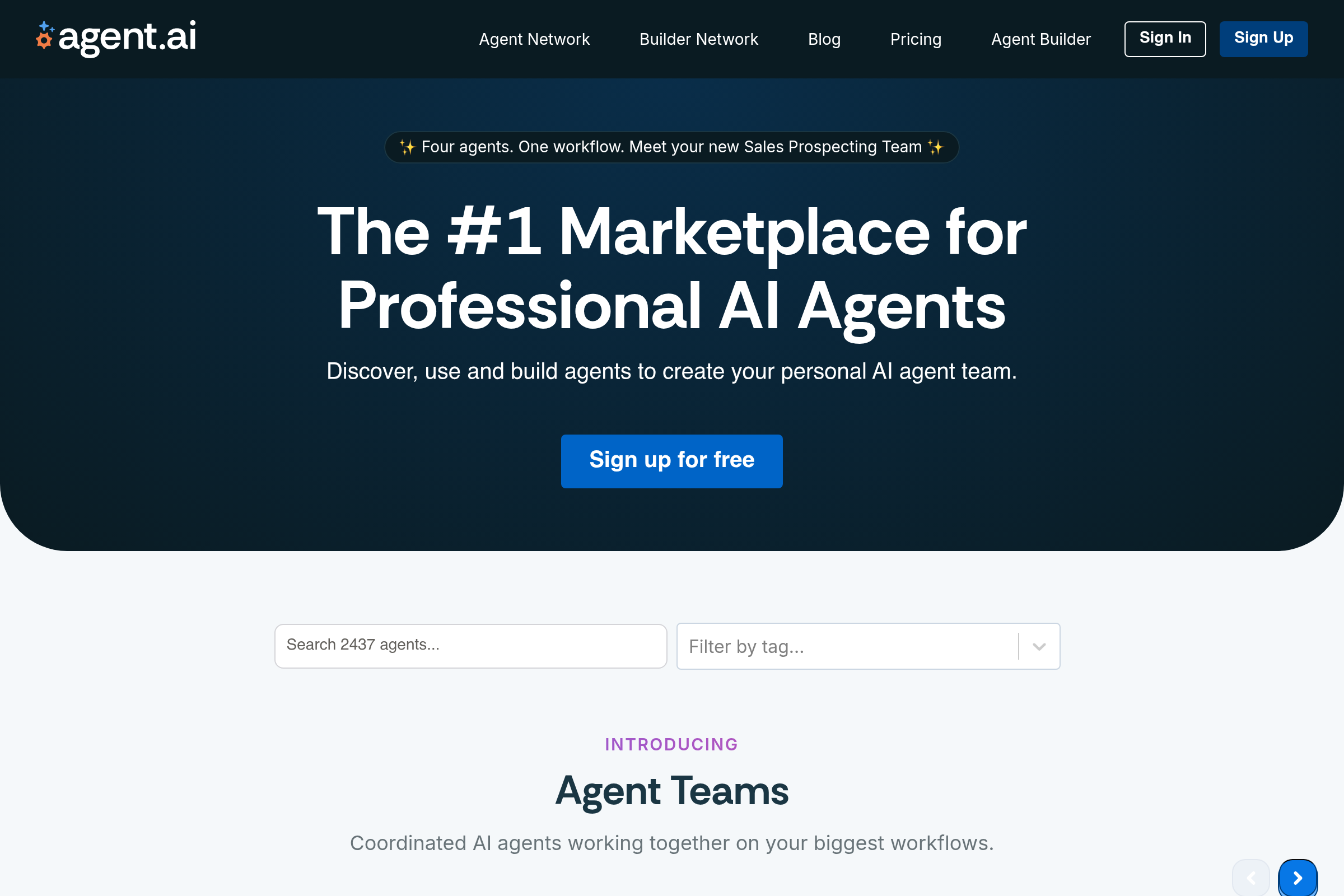
Best front-door to the AI agent ecosystem for individuals and small teams exploring what's possible — not a production-grade platform, and not pretending to be.
OVERALL SCORE
6.4
out of 10
External link · opens in new tab
TL;DR
Agent.ai is the easiest place in 2026 to encounter the AI agent space without commitment. It’s a marketplace, a builder, and a community rolled into one — built by Dharmesh Shah (HubSpot’s CTO) and benefitting from his network. For curious individuals and prototyping teams, it’s the right starting point. For production B2B deployment, it’s not architected for that and doesn’t pretend to be.
Who it’s for
Agent.ai targets two audiences: individuals exploring what AI agents can do, and small teams running lightweight automations that don’t justify the operational overhead of a “real” platform. Both audiences are well-served. The platform is genuinely easy to start with — no Docker, no API keys, no friction.
Where Agent.ai is NOT for you: any context where uptime, governance, audit trails, or data residency matter. There’s no SLA. There’s no SOC2. There’s no enterprise contract. The platform’s value proposition is accessibility, not robustness.
At a glance
- Pricing: Free tier with usage caps; Pro at $29/month for higher limits
- Billing: Monthly
- Builder: Browser-based, no-code
- Marketplace: Hundreds of community-published agents
- Integrations: Limited compared to dedicated platforms — focused on common SaaS and web tools
Features deep-dive
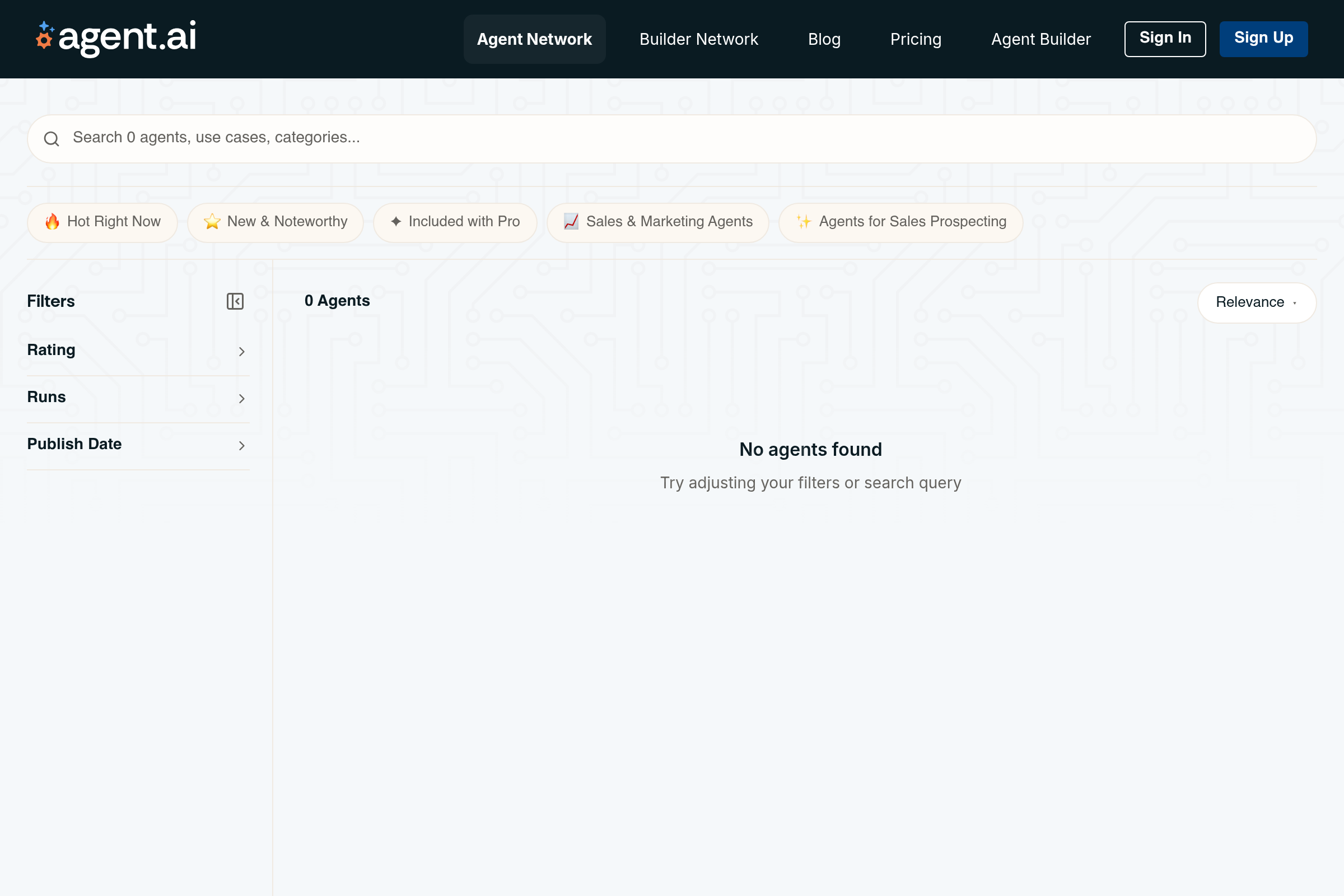
Marketplace. The discovery experience is the most differentiated thing about Agent.ai. You browse agents by category (research, writing, productivity, sales), preview what they do, fork them into your account, and run them. This is more akin to GitHub Gists for agents than a curated app store.
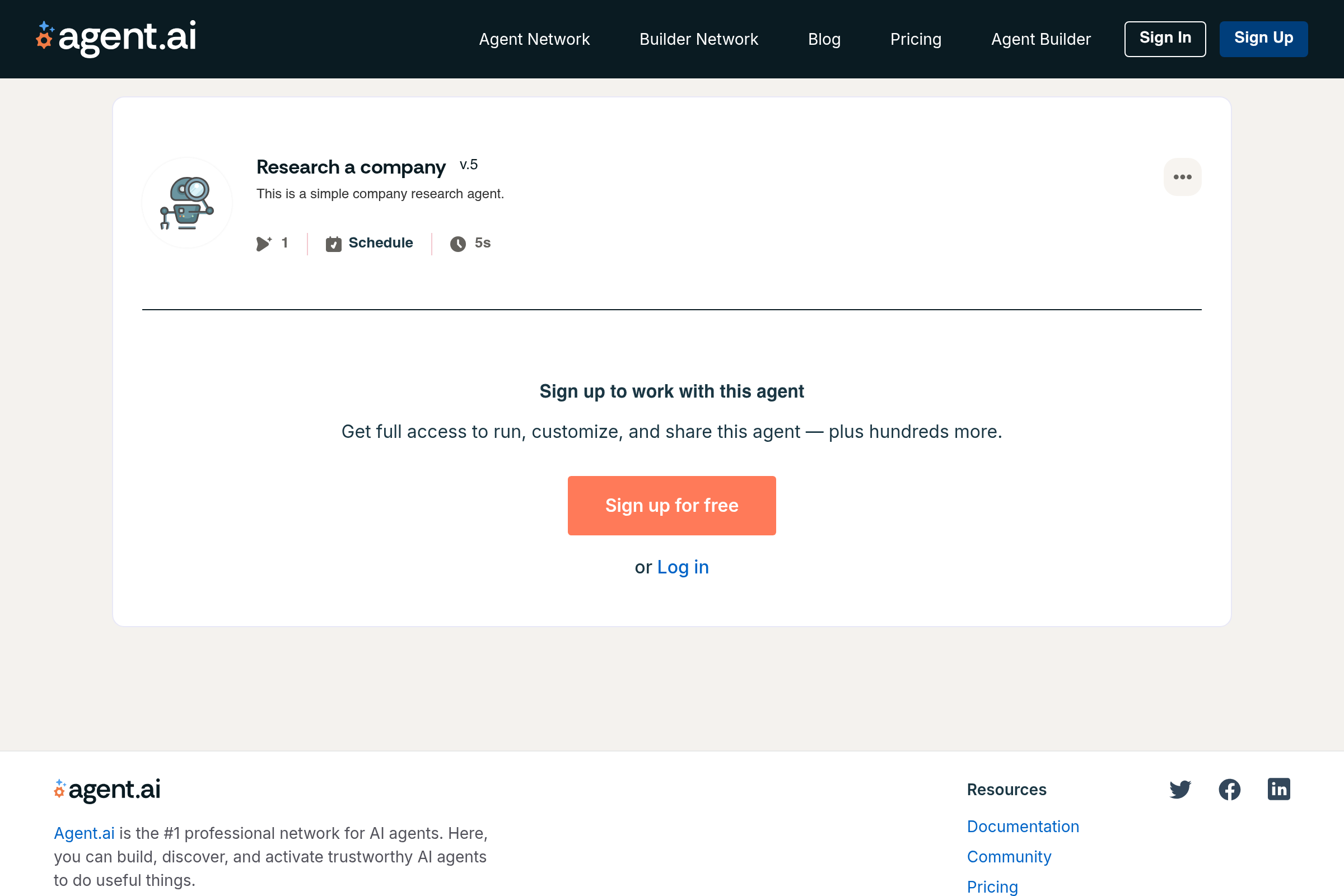
Builder. The browser-based builder uses a chat-like interface where you describe what you want and the platform scaffolds an agent for you. For simple use cases this works; for anything substantive, you’ll be editing prompts and tool selections directly.
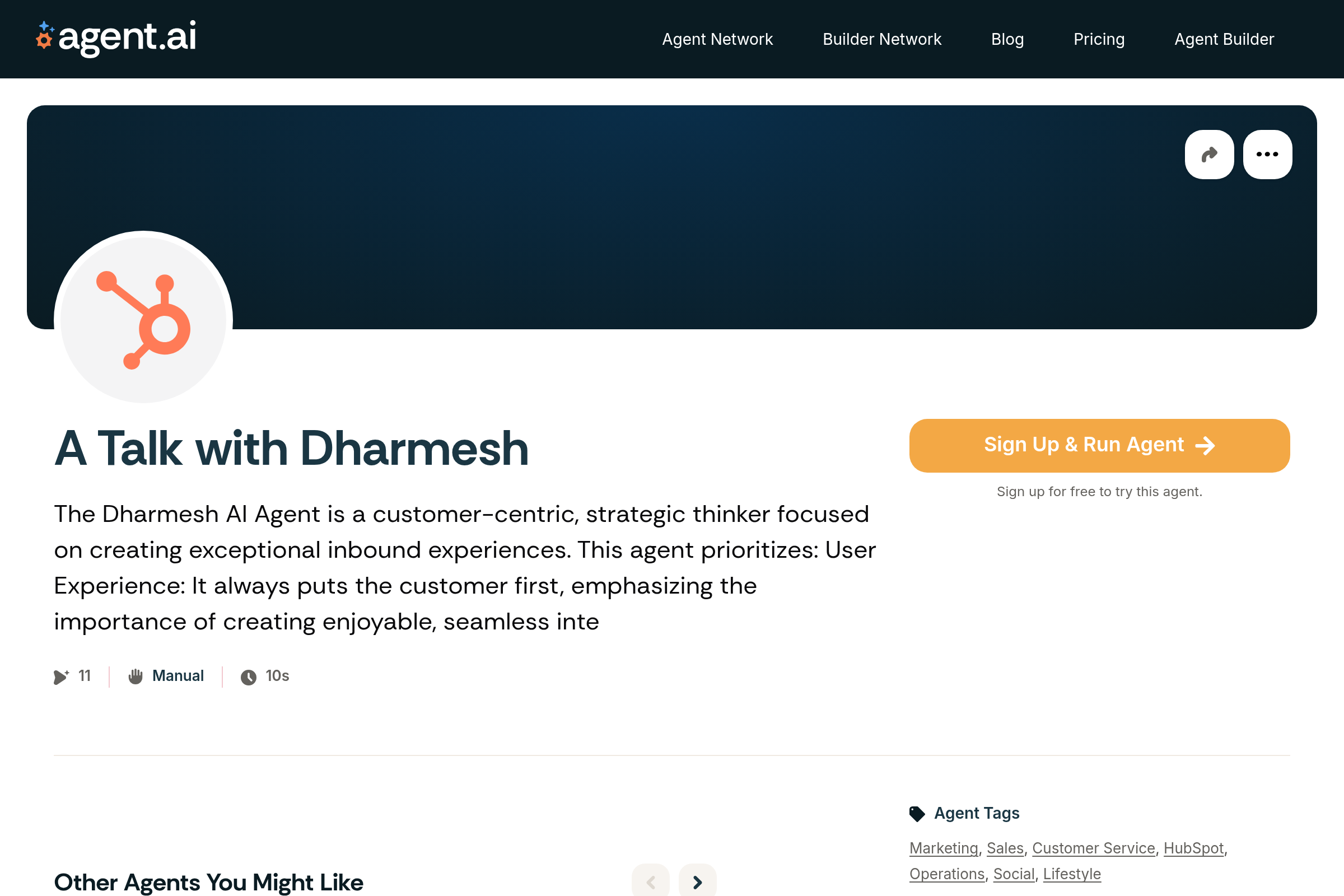
Community. A genuine community has formed around the platform — builders publish agents, others fork and improve them, conversations happen on Twitter and Slack. The community quality is high relative to most marketplace platforms, partly because of the founder’s personal pull.
Pricing analysis
At free, Agent.ai is the cheapest way to encounter the AI agent space. At $29/month Pro, it remains the cheapest entry-level option. Comparison is misleading because Agent.ai’s capabilities don’t overlap with Lindy or n8n or CrewAI — those are platforms; Agent.ai is closer to a sandbox + community.
If you’re prototyping ideas, free Agent.ai is the right tool. If you’re deploying to customers, neither Agent.ai’s free nor Pro tier is the right tool.
Strengths
The zero-friction onboarding is the strongest feature. Within five minutes a new user has run an agent and seen the value proposition. No platform comes close on this dimension.
Discovery via the marketplace genuinely accelerates learning. Browsing twenty agents in your problem space teaches you more about what’s possible than reading three platform documentation sites. The platform earns its place in any AI-curious user’s bookmarks bar.
Weaknesses
The platform is not architected for B2B production deployment. Outage tolerance, throughput guarantees, custom governance, audit logging, role-based access — none of these are first-class. Don’t expect them.
Marketplace agents vary widely in quality. The best are excellent; the median is competent; the worst leak prompts, fail silently, or break on edge cases. Vetting is minimal. Treat marketplace agents as starting points for forking, not as production-ready solutions.
Long-term sustainability question: the monetization model for agent builders is unclear. Without strong incentive structures for top contributors, the marketplace risks becoming a long tail of abandoned prototypes. Watch this space.
Verdict
Use Agent.ai to learn the AI agent space, prototype ideas, and discover patterns the community has solved. Graduate to Lindy, n8n, or a code-first framework when you decide to ship something to production. The two roles don’t compete — they sequence. See FAQ below.
FAQ
-
Is Agent.ai really free? +
The free tier is genuinely free for light usage. The Pro tier ($29/month at last check) unlocks higher run counts and longer context. There's no extraction model where 'free' means data harvesting.
-
Can I use Agent.ai for my business? +
For prototyping and personal productivity, yes. For mission-critical workflows, no — there's no SLA, no SOC2, no robust governance. Use it to validate ideas, then graduate to Lindy, n8n, or a code-first framework.
-
What makes the marketplace different from a Zapier template gallery? +
Community-built and discovered. Anyone can publish an agent; users can browse, fork, and remix. The Zapier templates are vendor-curated. Agent.ai is more user-curated, with the usual quality tradeoffs.
-
How does Dharmesh Shah's involvement affect the platform's trajectory? +
It drives adoption from the HubSpot community and brings credibility. It doesn't change the fundamentals: this is still a marketplace product, not an enterprise platform. Don't assume HubSpot-grade SLA or governance.

Stéphane Viaud-Murat
CEO, mi4.fr